
Dispatch
The board, jobs and locations
Schedule work across technician rows, keep the service address separate from the bill-to, and set work to repeat.
Last updated
The dispatch board#
Technician rows run across a day or a week, with everything unscheduled sitting in a drawer beside them. Drag work onto a row to schedule it, drag it again to move it.
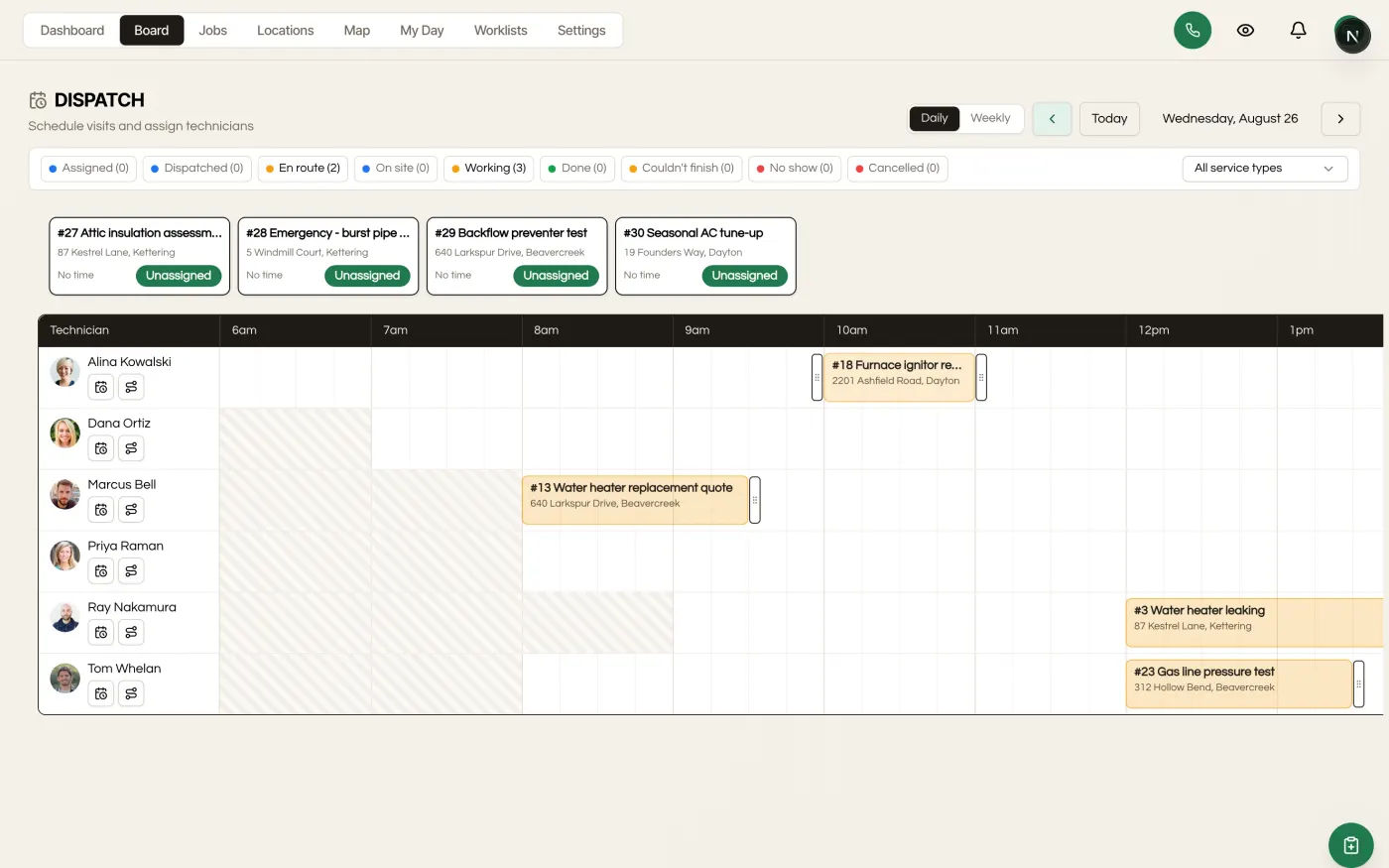
Double-book someone and the board refuses first, then offers to book anyway, so overbooking is a decision you make rather than one that happens to you. Approved time off is shaded and skipped by smart scheduling and recurring auto-assignment.
Optimize puts one technician's stops into a sensible driving order and waits for you to apply it. It is on the day view only; the week view has no equivalent.
Dragging never creates a visit. The board only MOVES or REASSIGNS work that already exists. Multi-day work is one visit per trip, added on the job's Visits tab and then dragged into place - there is no create-on-drop.
Status filters across the top let you narrow to assigned, dispatched, en route, on site, working, done, couldn't finish, no-show or cancelled work.
Jobs and service locations#
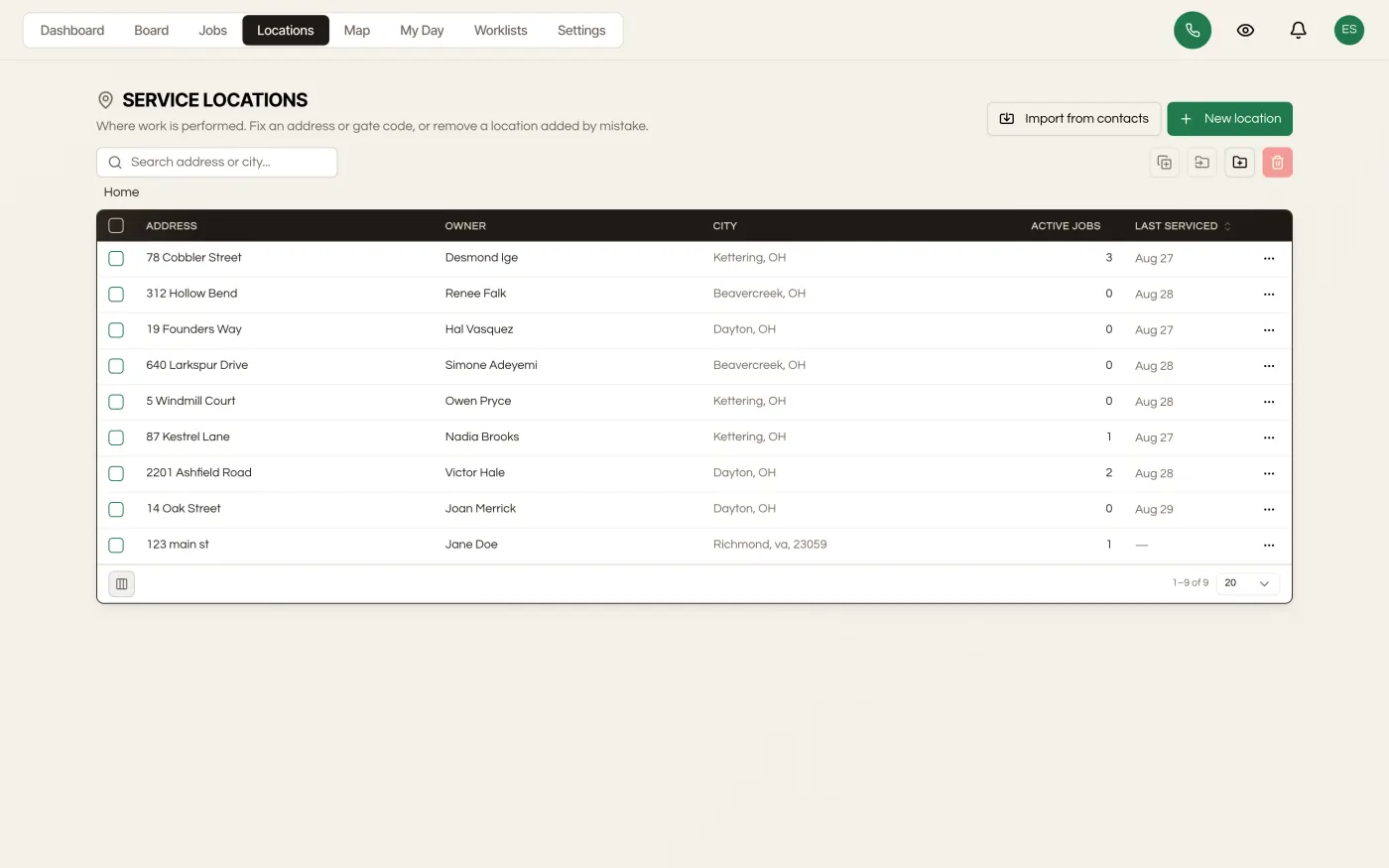
A service location is the address where work happens, and it is kept separate from the bill-to. In field service they are constantly different: a property manager, a landlord, a warranty company, an insurer.
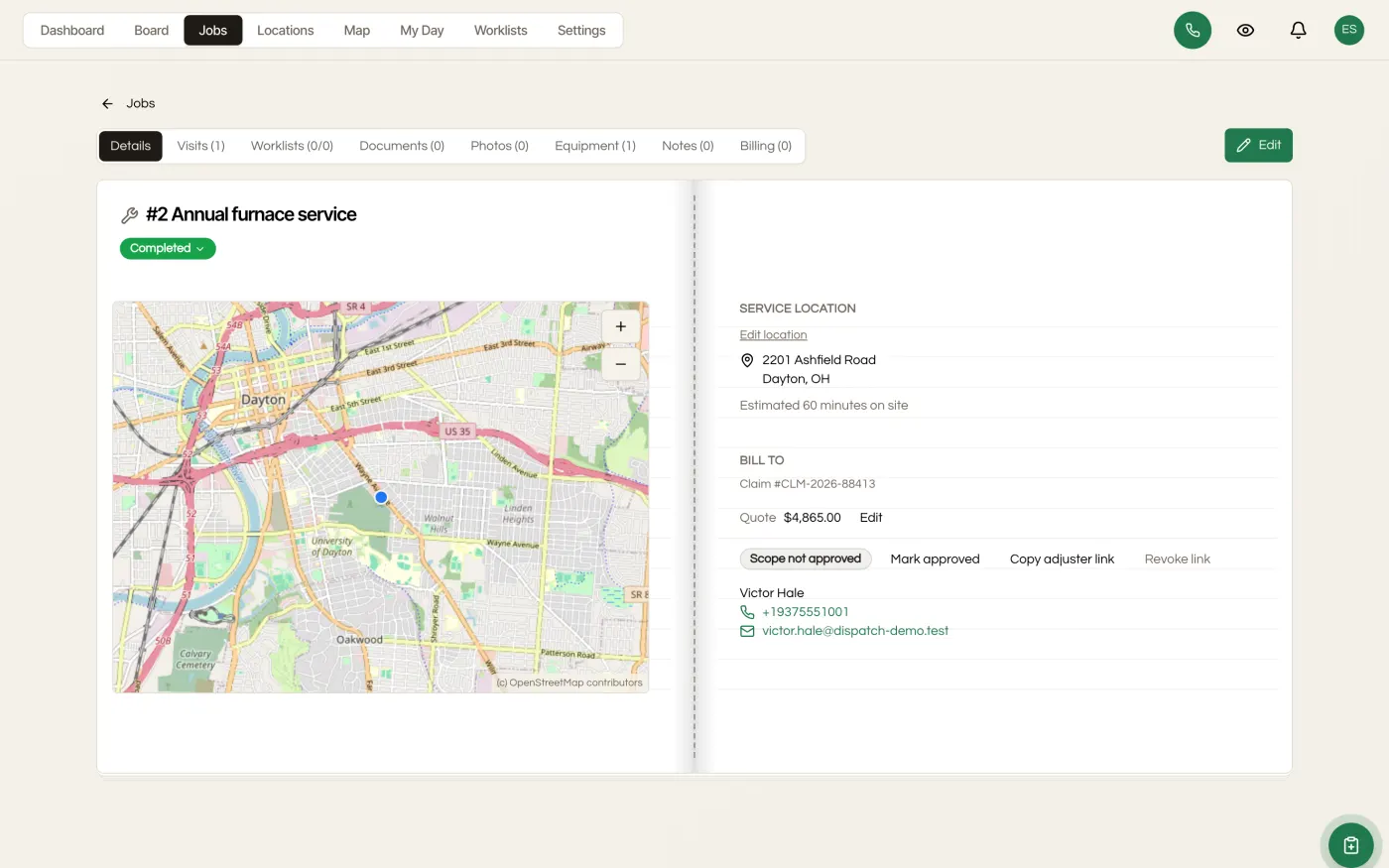
The job page shows both side by side, along with every visit, the scope, the equipment on site, the photos and the worklists attached to that job. One property-management company can own forty addresses, each with its own site contact.
A visit carries a lead technician and one helper. A third person needs a second visit on the same job, and only the lead can finish a visit.
The bill-to is a contact, not a company record. A carrier, a warranty firm or a management office is whoever you deal with there. A property can be owned by a company; a job's payer is a person.
There is no per-property access-hours field. A building that only opens 6pm to 6am is not something the board or the optimizer can plan around, which follows from Dispatch planning one calendar day at a time.
Recurring visits#
Maintenance routes, seasonal contracts and standing service agreements generate their visits on a schedule instead of being rebuilt by hand every cycle.
Weekly, every second week, every third week, and the nth weekday of the month are all ordinary schedules here, so a first-Monday commercial route and a bi-weekly maintenance visit both work without a spreadsheet. The series is one thing to pause or change, not a pile of copies to keep in step.
Recurrence is set on each job, in the job dialog. There is no reusable recurring template to build once and apply to a route, so a ten-building nightly round is ten jobs each carrying their own rule. The multi-weekday shape itself is supported: one job on Mon/Wed/Fri and another on Tue/Thu is an ordinary setup.
When one day of a multi-day job moves, the rest stay put by default. The setting is When a visit on a multi-day job moves on the Scheduling tab, and it ships on Leave the rest of the job. A three-day install where day two is rained out will leave day three where it was until you change this or move it yourself.
Printing a route sheet#
Print a technician's day from their own screen and it comes out as a route sheet: times, addresses, gate codes, access notes, the job details and a signature line, with none of the dashboard furniture around it. Every shop has one person who wants paper, and every commercial building has a gate code that has to be on it.